
Tap Water vs Bottled Water
Cost, convenience, microplastics and sustainability compared for modern homes.
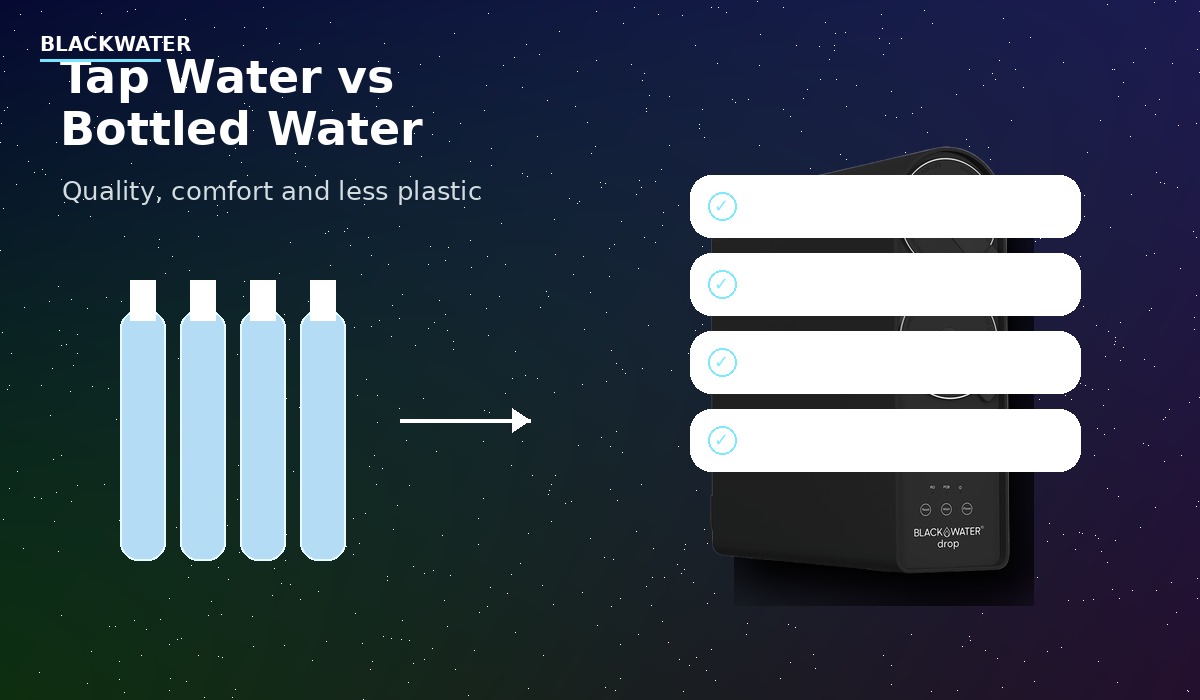
Many households buy bottled water for taste, convenience or perceived quality. But modern drinking water filters make it possible to create a premium water routine at home while reducing plastic bottles, transport weight and storage space.
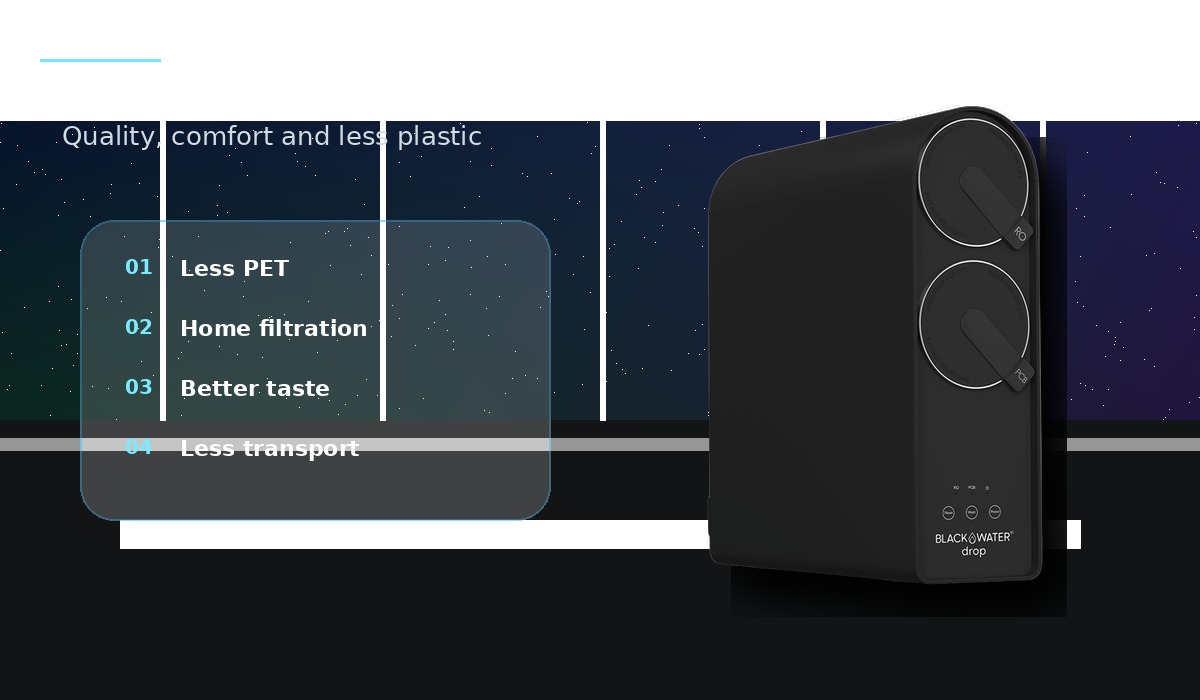
Cost and convenience
| Topic | Best for | Notes |
|---|---|---|
| Bottled water | Immediate purchase | Requires carrying, storage and repeat buying |
| Tap water | Lowest direct cost | Taste depends on local water and building pipes |
| Filtered tap water | Daily home use | Combines convenience with improved drinking experience |
| Countertop hot/cold system | Premium routine | Filtered water plus hot and cold functions |
Plastic and microplastics
Reducing single-use bottles is one of the easiest sustainability steps for a household. A kitchen water filter can reduce the need for disposable PET bottles and make high-quality drinking water available directly at home.
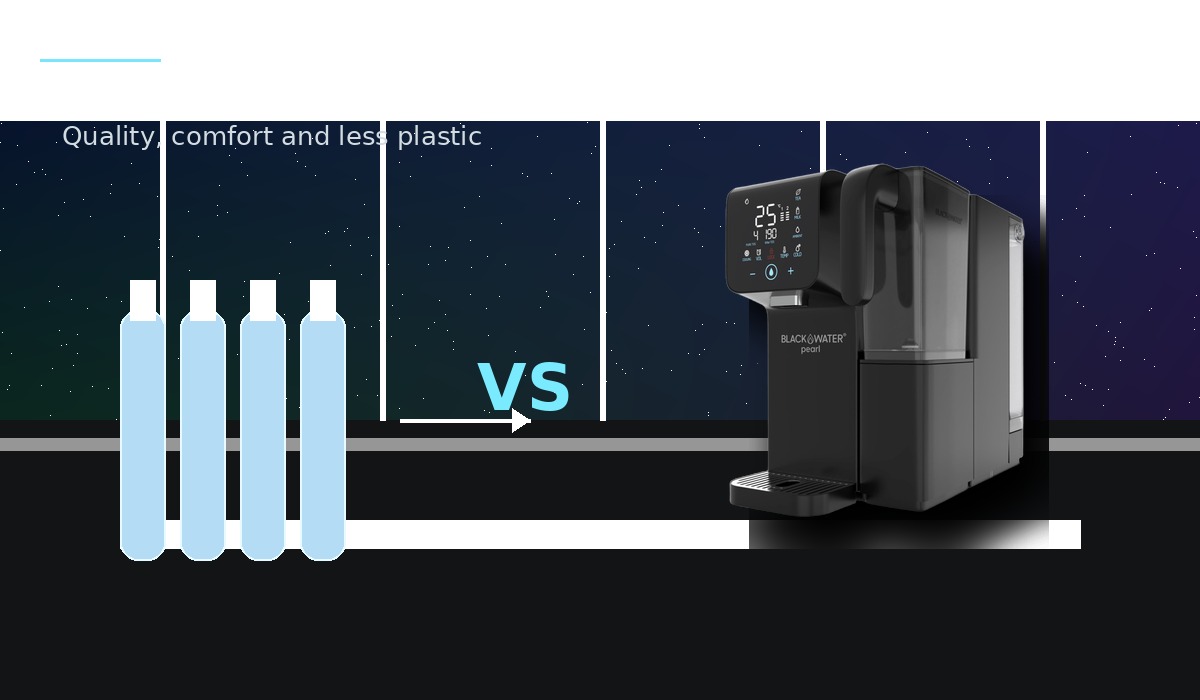
Which solution fits best?
If you want filtered water for the whole kitchen, consider BLACKWATER Drop. If you want hot and cold filtered water without installation, BLACKWATER Pearl is the countertop choice.
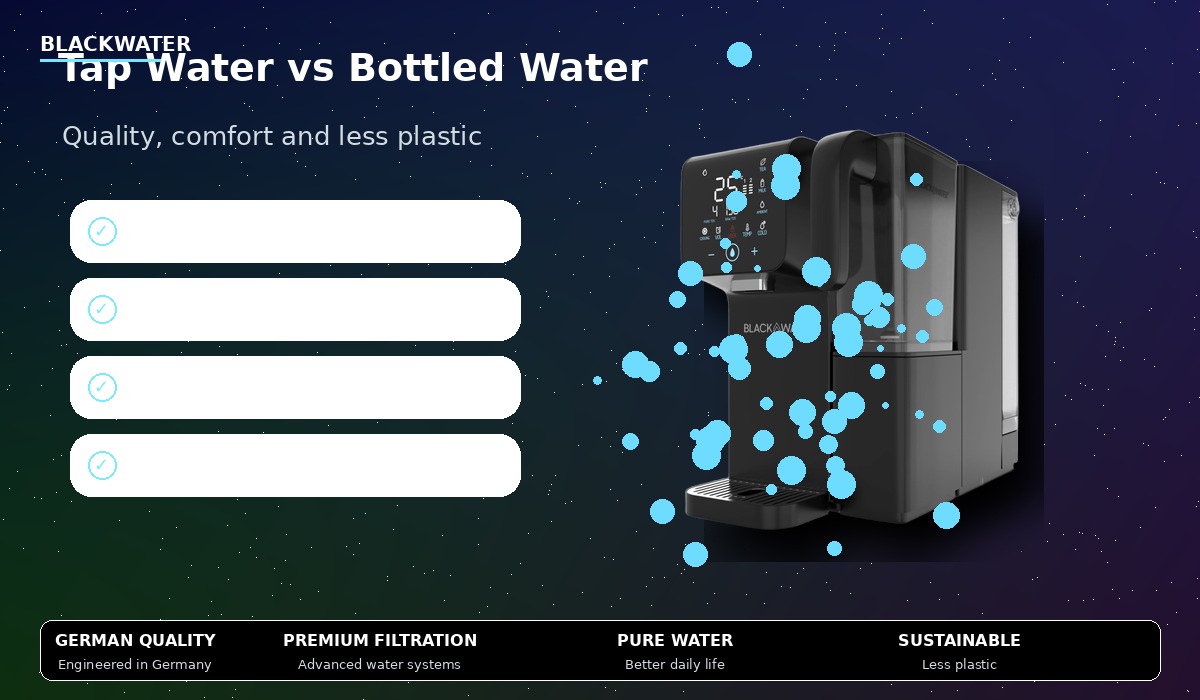
Recommended products
FAQ
Is filtered water always better than bottled water?
It depends on local water quality and the filtration system. A premium filter can offer strong convenience and reduce single-use plastic.
Which system is best for a kitchen?
For permanent kitchen use, an under-sink reverse osmosis system such as BLACKWATER Drop is the most integrated option.
Related articles
This article is educational and does not replace local water testing or professional technical advice.