
Water Remineralization Explained
Calcium, magnesium, potassium and sodium compared — and why remineralization changes both taste and drinking experience.
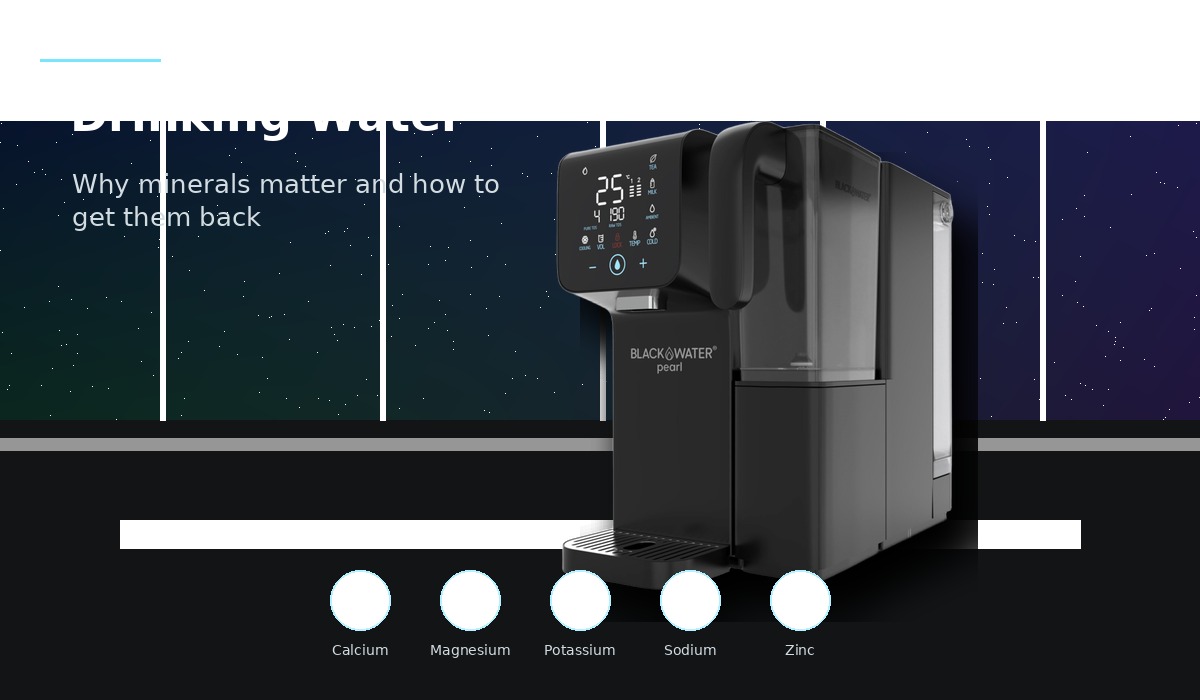
After reverse osmosis, water can be very pure but also low in dissolved minerals. Remineralization adds selected minerals back into the water to create a more balanced taste and a smoother drinking profile. For many people, this is the difference between water that tastes flat and water that feels fresh and natural.
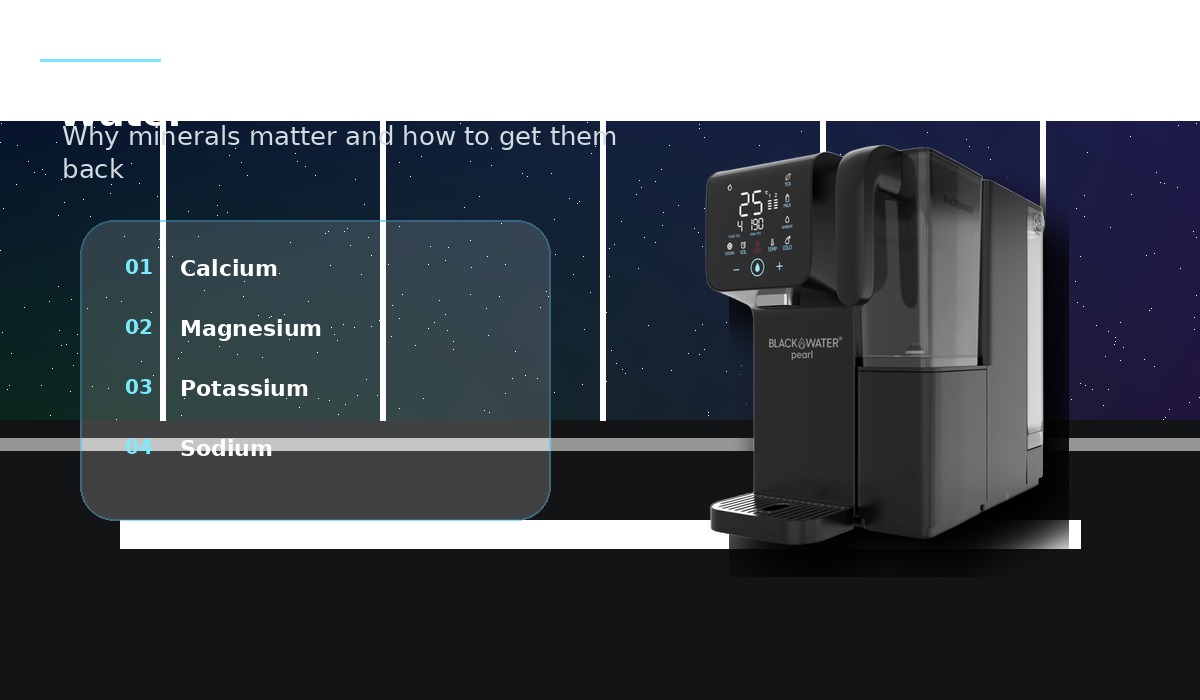
Which minerals are added?
| Topic | Best for | Notes |
|---|---|---|
| Calcium | Smooth mineral profile | Often associated with a rounded, clean taste |
| Magnesium | Balanced mouthfeel | Can add a slightly sweet and fresh impression |
| Potassium | Electrolyte balance | Usually neutral in taste |
| Sodium | Mineral balance | Can taste slightly salty at higher levels |
How mineral types differ
Calcium and magnesium are usually the most important minerals for taste. Calcium can make water feel structured and smooth. Magnesium often adds freshness and a softer mouthfeel. Potassium and sodium are electrolytes, but their taste impact depends strongly on concentration.

Why remineralization matters
Good remineralization is not about making water hard again. It is about adding selected minerals in a controlled way. BLACKWATER systems are designed to combine purification with a premium drinking experience, so filtered water does not only become cleaner — it also tastes better.
Recommended products
FAQ
Is filtered water always better than bottled water?
It depends on local water quality and the filtration system. A premium filter can offer strong convenience and reduce single-use plastic.
Which system is best for a kitchen?
For permanent kitchen use, an under-sink reverse osmosis system such as BLACKWATER Drop is the most integrated option.
Related articles
This article is educational and does not replace local water testing or professional technical advice.